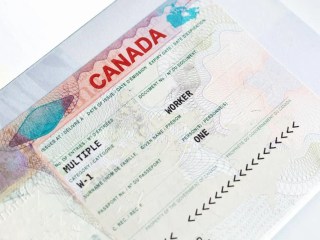

There’s a moment every seasoned traveller knows well — the one where you’re standing at the border, jet-lagged, brain foggy, just desperate to get through.
For most people, it’s straightforward: one passport, one queue, done.
For dual nationals, it’s a little more complicated. And if you hand over the wrong one? Well, let me tell you from personal experience: you’re going to have a very uncomfortable conversation.
This is the story of my first trip back to the UK after becoming a Canadian citizen — and everything I learned about travelling with two passports the hard way.
The Mission: A Birthday Surprise
Last week, after six long years of longing for a decent cup of tea and some Hob-Nob biscuits, I flew back to the UK on a mission: to surprise my Dad for his 70th birthday.
The plan was simple: surprise him.
So, I enlisted the help of my mum, aunt and cousins. For several weeks, we planned out my entire trip in secret. My cousins offered to collect me from the airport and drive me to my parents’ home on the Norfolk/Suffolk border, where they moved a couple of years ago.
Usually, Dad would collect me from the airport — but that wasn’t an option this time. And neither, it turned out, was my preferred direct British Airways flight. To maintain the element of surprise, I’d have to sacrifice the creature comforts and settle for budget carrier Play Airlines instead. Play doesn’t fly direct to the UK, so rather than a civilised 7-8 hour hop into Heathrow, I found myself on two flights via Iceland, with a layover and a total travel time of just under 23 hours door to door.
See, Dad? I do love you.
The Border Blunder: A Lesson in Dual Passport Travel
This trip was also my first return to the UK since becoming a Canadian citizen — and I had absolutely no idea what that meant for how I’d move through borders.
Spoiler: it means quite a lot.
Picture the scene. I’d just survived a gruelling 23-hour journey. My brain was operating on fumes. I reached the UK border, rummaged through my bag, and handed over the first passport I found.
The border officer took one look, scanned it, and scowled.
“Oh England,” I thought, “I’ve missed you and your grumpiness.”
“Where is your British passport?” he asked, his tone somewhere between exasperation and amusement.
“In your hands,” I replied, somewhat indignantly.
And that’s when it hit me. I had handed him my Canadian passport.
What followed was a thorough lecture on the importance of using the correct passport — and a warning that if it happened again, I could be denied entry into the UK. Apparently the UK border system is sophisticated enough to flag dual nationals and identify which passport they should be travelling on.
British nationals must enter the UK on their British passport. No exceptions.
Lesson learned — the hard way.
Eventually, I was officially allowed onto UK soil. After a surprisingly swift wait for my bags — Stansted is genuinely more efficient than its reputation suggests — I texted my cousins, located the largest coffee I could find, and headed for the exit.
My ride arrived a few minutes later, and over the next hour and a half my aunt, cousin and I spent the drive catching up on everything I’d missed. In typical English fashion, it rained for most of the journey — but as we pulled up to my parents’ house, the sun made a very welcome appearance.
And then, finally, the moment I’d travelled 23 hours for. I walked into the living room and sat down across from my Dad. The look of shock and delight on his face when he realised it was me was worth every mile travelled — and every word of the scolding I’d received at the border.
Now that I’m back home in Canada, here’s what I learned about the realities of dual citizenship travel — the pros, the cons, and the quirks I’ll be navigating for every trip from here on in.
The Pros of Dual Citizenship Travel
Somewhere between the border lecture and that bucket-sized coffee, it struck me just how much had changed about the way I’d be travelling from here on in — and not all of it was complicated.
The Freedom to Move Between Two Worlds
One of the greatest perks of dual citizenship is the sheer freedom it gives you. With a British and Canadian passport, I can be sipping tea in London one day and back in Toronto the next — with none of the visa headaches that come with a single nationality. As a citizen of both countries, I experience the very best of both worlds.
Expanded Visa-Free Access
As a British citizen, I retain the right to enter and remain in any EU or EEA country — even post-Brexit, until my current passport expires. My Canadian passport, meanwhile, gives me hassle-free entry into the USA (a genuine relief if you travel frequently across North America) and visa-free or visa-on-arrival access to numerous countries where British passport holders face more complex visa processes. Together, the two passports open up a significant portion of the world with minimal friction.
Flexibility for Work and Opportunity
Having the right to live and work in two countries is a genuine career advantage. As a British citizen, I can work in the UK and, with the right arrangements, across many Commonwealth nations. As a Canadian citizen, I benefit from trade agreements and bilateral arrangements with the US and beyond. It’s a level of flexibility that, once you have it, is very hard to imagine living without.
A Built-In Conversation Starter
Carrying two passports makes you immediately interesting at dinner parties. The accent helps too. I’ve lost count of the conversations that have started with “wait, but which one are you actually?” — and honestly, I love it.
Plausible Deniability
If someone references a cultural touchstone I don’t recognise, I can simply say, “Well, I probably wasn’t here for that.” It has worked many times. I still have absolutely no idea what the Red Green Show is, and I’ve made peace with that.
The Cons: What Nobody Warns You About
Dual citizenship isn’t without its complications. Here’s what I wish someone had told me before I handed over the wrong passport at Heathrow.
Border Confusion is Real — and Consequential
As my experience illustrates, using the wrong passport isn’t just embarrassing — it can have serious consequences. Border systems in many countries, including the UK, are sophisticated enough to flag dual nationals. Always know which passport to use before you travel, not while you’re standing at the border.
Tax Implications
Navigating two tax systems requires attention. The obligations and benefits differ between the UK and Canada, and understanding both — especially if you earn income in either country — is worth investing time (and potentially a good accountant) in.
The Identity Question
There’s a quieter, more personal dimension to dual citizenship that doesn’t often get discussed: the occasional sense of not quite belonging fully to either place. Am I more British or more Canadian? Honestly, the answer shifts depending on where I am and who I’m with. It’s not a problem, exactly — but it’s something to sit with.
Homesickness, Doubled
The flip side of having two homes is that you’re always missing one of them. Technology bridges the gap, but nothing replaces being there in person — something that became very clear the moment I walked into my parents’ living room and saw the look on my Dad’s face.
The Moment That Made It Worth Every Mile
After the border drama, the long drive, and a rain-soaked journey through the English countryside (classic), we pulled up to my parents’ house. The sun made a brief but very welcome appearance.
I walked into the living room. Sat down across from my Dad.
The look on his face when he realised it was me — the shock, the delight, the disbelief — was worth every mile travelled and every scolding I received at the border.
Seventy years old, and he still managed to look like a kid on Christmas morning. Worth it.
Practical Tips for Dual National Travellers
If you’re a dual national — or are on your way to becoming one — here’s what I’d pass on from the school of hard knocks:
Keep Your Passports Separate and Accessible Store each passport in a clearly labelled, separate compartment of your bag. This one simple habit would have saved me a lot of embarrassment at Stanstead.
Know the Rules Before You Fly Every country has different rules for dual nationals. The UK requires British citizens to enter on their British passport. The US requires American citizens to use their US passport. Always check the entry requirements for your destination before you travel.
Use Each Passport Strategically Think of your passports as tools, each with different strengths. Use the one that gives you the best entry conditions for your specific destination — and make sure the passport you check in with matches the one you’ll present at your destination’s border.
Keep Copies of Both Carry digital and physical copies of both passports. If one is lost or questioned, having documentation can save you hours of stress.
Consult a Tax Professional Dual citizenship and tax residency are complex. If you earn income in either country, get advice tailored to your situation.
Final Thoughts
Travelling as a dual national adds a layer of complexity that I hadn’t fully anticipated when I was standing at the passport office the morning after my citizenship ceremony, grinning from ear to ear. But the freedom, flexibility, and sense of belonging that comes with holding two passports — two countries that have your heart — is, without question, worth it.
Just remember to check which passport you’re handing over before you get to the border.
Have you navigated dual national travel? I’d love to hear your experiences — drop a comment below or find me on Instagram at @letsflyeverywhere.